
Creating a linkable asset is not the same as writing a blog post. The bar is higher, and the strategy is different. Here’s the process that tends to work best.
1. Start With Link Intent, Not Just Keywords
- Research what people actually link to in your niche. Use tools like Ahrefs, Semrush, or Moz to see which pages have attracted the most links in your industry.
- Look for patterns: data, templates, calculators, glossaries, controversial analyses, etc.
- Identify the “linkerati” in your space—journalists, bloggers, analysts, communities—and ask: What do they constantly need to explain or reference?
This ensures you design an asset around real link demand, not just search volume.
2. Define a Clear Angle and Unique Value
To earn links, your asset must offer something that isn’t easily replaced:
- A new dataset or a fresh way of analyzing existing data.
- A more complete or more current guide than anything currently ranking.
- A tool that is easier, faster, or more intuitive than alternatives.
Write a one‑sentence value statement, e.g., “This tool is the simplest way for small business owners to estimate their cash flow runway in minutes.”
If you can’t articulate why someone would link to this instead of existing resources, refine the concept.
3. Invest in Professional‑Level Execution
The web is flooded with content. Presentation matters:
- Design: Clean, mobile‑friendly layouts, polished infographics, and clear charts increase perceived authority and trust.
- UX and development: Tools and interactives must be fast, intuitive, and bug‑free.
- Copy and structure: Skimmable headings, clear explanations, and tight editing make your asset easier to understand—and easier to cite.
This is where professional writing, design, and development pay off. A mediocre asset rarely earns links; a standout one can attract them for years.
4. Optimize for Search and Linkability
- Target relevant keywords, but prioritize clarity and usefulness over keyword stuffing.
- Use descriptive titles, schema markup (where appropriate), and compelling meta descriptions.
- Make it easy to link and share: embed codes for infographics, clear URLs, and pre‑written snippets for outreach.
5. Promote Strategically (Don’t Just “Publish and Pray”)
Even the best asset needs an initial push:
- Digital PR and outreach: Pitch journalists, bloggers, newsletter editors, and podcasters who cover your topic.
- Community sharing: Post in relevant forums, Slack groups, LinkedIn groups, subreddits (following their rules), and professional communities.
- Influencer and partner collaboration: Co‑create or co‑promote with brands and experts who already have an audience.
- Internal linking and email: Feature your asset in your own content and email sequences to build early traffic and engagement signals.
Promotion is what turns a great idea into a visible, link‑earning machine.
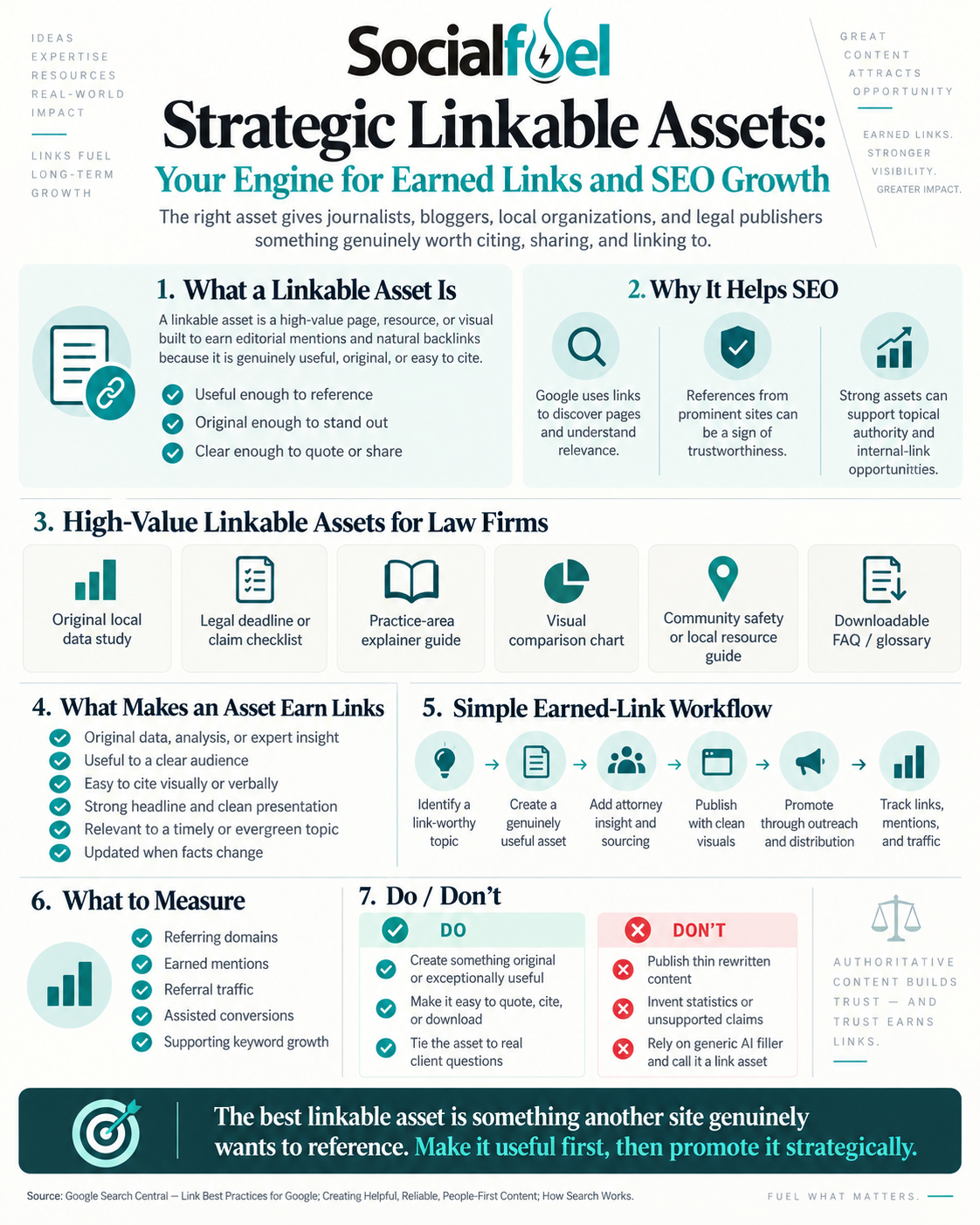
Common Pitfalls and Best Practices
Mistakes to Avoid
- Creating content about your product, not the audience’s problems. Overly promotional pieces rarely earn editorial links.
- Rehashing existing content without adding real value. If your guide is just a remix of the top three Google results, it’s unlikely to attract links.
- Ignoring design and usability. Walls of text, confusing layouts, or slow tools make people bounce instead of link.
- Gating your best asset behind a form. Great for lead gen, terrible for links. Most publishers won’t link to something their readers can’t see.
- Skipping outreach. “If you build it, they will come” is not a link‑building strategy.
Best Practices for Linkable Assets That Actually Earn Links
- Focus on “evergreen plus updatable.” Choose topics that stay relevant and schedule periodic refreshes, especially for data and statistics.
- Think in terms of “reference value.” Ask: “Would someone teaching or explaining this topic want to point to this page?”
- Build assets that support your commercial goals. Use internal links from the asset to related service pages, product pages, or lead magnets to turn authority into revenue.
- Measure and iterate. Track links earned, referring domains, organic traffic, and assisted conversions. Use these insights to refine future assets.
Over time, you’re not just publishing isolated pieces—you’re building a portfolio of authority assets that strengthen your entire domain.
Conclusion: Let Our Experts Build Your Linkable Assets
Earning high‑quality links today requires more than outreach lists and generic blog posts. It demands standout content—linkable assets—designed from the ground up to attract attention, citations, and coverage.
When you invest in professionally created linkable assets, you’re building long‑term SEO equity:
- Assets that journalists and bloggers want to reference.
- Tools, research, and guides that keep earning links long after launch.
- Higher rankings for both your informational and commercial pages through smart internal linking.
Our team specializes in exactly this: researching link opportunities in your niche, developing concepts that match real link intent, and executing them with the level of writing, design, and development needed to stand out. We also support you with strategic promotion and outreach to maximize coverage and backlinks.
If you’re ready to turn your website into a true authority with linkable assets that deliver measurable SEO ROI, we’d be happy to help. Contact us today to discuss a custom linkable asset and link‑building strategy tailored to your brand and growth goals.